
Leadership is not defined only by the circumstances we encounter, but also by how we learn from them and determine what comes next. Higher education leaders often accept positions because they believe in an institution’s mission and see opportunities to make a meaningful difference. They bring experience, professional judgment, and a commitment to supporting students,…
COLO Compass: Evidence and practical direction for chief online learning officers. Throughout National Distance Learning Week, I’ve written about how much online learning leaders are now expected to handle: AI governance, the financial case for online education, relationships with policymakers, financial aid fraud, and operations that extend well beyond their own units. The question for…
Clearly, many aspects of everyday living have begun to change in the emerging, evolving “Age of AI.” Higher education must acknowledge and adapt to those changes and anticipate the ones yet to come. Some faculty members fail to recognize that the world has changed and we must respond to those changes in how and what…
In a remarkable period of intense development of powerful Artificial Intelligence (AI) capabilities, leaders in the industry have called for a modest level of oversight to ensure safety and provide protections against misuse and abuse of the power of AI. Late last month, President Trump announced the formation of a “Superintelligence Force” to oversee AI…
UPCEA Announces Indiana State University as 2026 Jim Fong Grant Recipient
WASHINGTON, D.C., November 10, 2026 — UPCEA is pleased to announce that the 2026 Jim Fong Grant for Advancing Online and Professional Education has been awarded to Indiana State University. Indiana State’s project will use a landscape survey and regional data analysis to find where the university is best positioned to build stackable, non-credit-to-credit credential…
ED Issues Workforce Pell FAQs; Courts Continue Changing Professional Degree List | Policy Matters (October 2026)
Major Updates U.S. Department of Education Provides Workforce Pell Grant FAQs The U.S. Department of Education has released FAQs on Workforce Pell Grants for short-term programs. The guidance covers items like the baseline eligibility standards: programs be at least 8 but fewer than 15 weeks or 150 to 599 clock hours and operational for a…
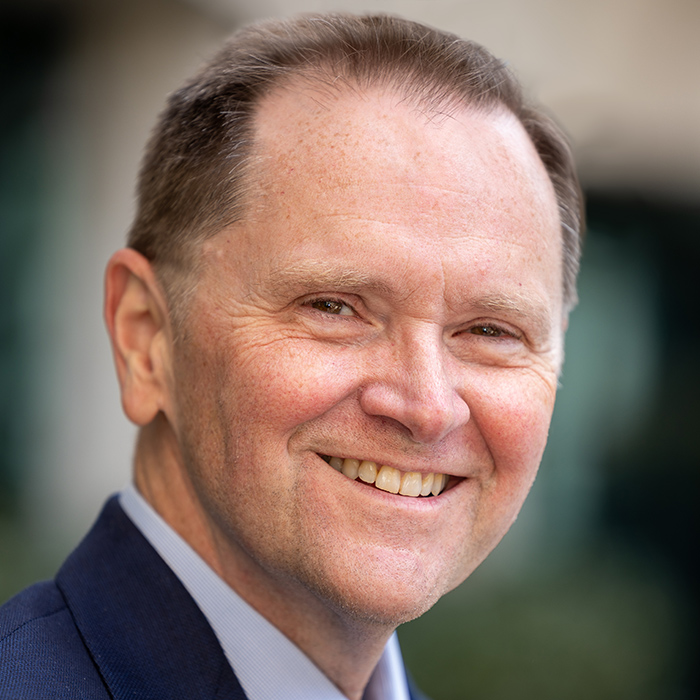
UPCEA CEO Robert J. Hansen to Retire in 2027; Board to Launch National Search for Successor
Hansen will leave an organization that has nearly quadrupled its annual revenue and become the leading association for online and professional education WASHINGTON, October 21, 2026 – The UPCEA Board of Directors today announced that Dr. Robert J. Hansen, who has led UPCEA, the online and professional education association, for more than 16 years, will…
Workforce Pell Moves from Rules to Reality: State Pipelines, New Federal Training, and $65 Million from Labor | Policy Matters (September 2026)
Major Updates Workforce Pell Moves from Rules to Reality: State Approval Pipelines Mature, ED Launches Training, and Labor Awards $65 Million Nearly three months after Workforce Pell Grants (Pell awards for programs of 150–599 clock hours, or 8 to fewer than 15 weeks) became available on July 1, the rollout is moving at very different…
In 1915, UPCEA’s founders built this association on a simple idea: carrying knowledge to the people. That founding purpose never had an expiration date, and it does not have one now. It is why, more than a century later, the question in front of us was never whether professional learning needs to change. It is…
The tagline for Convergence, Credential Innovation in Higher Education, raises two important questions: First, what kind of credentials are we talking about? Is the scope of credentials unlimited, blue sky, or confined to incremental changes on the margins of the status quo? And second, who is leading that innovation, and what do they need to…
Protecting students, data, and credentials starts at the top, because hacks don’t take holidays. Cybersecurity Is Now a Leadership Issue Universities aren’t just academic institutions anymore. They’re digital enterprises. Student data, research, and online platforms are valuable targets, and attackers know it. That’s why cybersecurity has moved out of the IT basement and into the…
Since the 1980s, higher education has steadily shifted from passive lectures to more active, student-centered learning. As Bonwell and Eison noted in Active Learning: Creating Excitement in the Classroom, this shift not only reinforces content mastery but also fosters critical thinking and problem-solving. Cynthia J. Brame, writing for Vanderbilt’s Center for Teaching, defines active learning…