
Tech Future Promotes Continuing Professional Education
Do you recall when continuing professional education was considered outside the mainstream of the higher education hierarchy, often relegated to extension services?
It wasn’t that long ago that professional education was the less-respected, fragile forum for night school, weekend programs, extension and applied study at many colleges and universities. More recently housing the nascent online programs of the 1990s, this school or college was last in recognition and stature among the more powerful renown and acclaimed schools and colleges. Liberal Arts and Sciences (LAS) ranked high in importance for the massive numbers of students both in the pre-requisite and general education categories. LAS also housed many of the well-published scholars and some of the larger research grants from NSF and other large public and private foundations and agencies that sponsored activities such as research centers. Other professional colleges and schools such as Education, Engineering, Medicine, Law and Business have a long legacy of influence and success over the decades. Their influence has been felt, in part, through their successful graduates who return to provide endowments and carry their collegiate heritage with them as they become shining examples of leadership and influence in society at large.
We are now entering a new era in society that brings with it changing jobs and opportunities for graduates. The advent of new technologies has shifted the job market and the needs for human labor and leadership. Our degree designs that were once considered the complete foundation for an entire lifetime of work, are now outdated in a matter of months. Job fields and industries are being overhauled by Artificial Intelligence (AI) with little regard to how those who work in those fields can best continue their careers or shift to another field or occupation.
It is at this moment in time that worldwide economies are in flux. Now, the more spontaneous and agile professionals, products and industries are rewarded for filling the needs of the transition to the new order. AI now serves as a loyal personal assistant, and increasingly takes over a core role previously held by a degree-holding human. In such fields as accounting, customer service, and research, we are seeing larger groups of professionals needing help in aligning and acquiring skills to meet societal needs. These professionals were educated at a time when college learning was all about acquiring and retaining information and knowledge that was assumed to remain most useful and viable for a career that lasted thirty years or more. Yet, that assumption is no longer valid.
The foundations of our careers are shifting. Increasingly, we have ready, competent, personalized assistance through AI to help us with a myriad of tasks in our professional life. With that shift, higher education must also now adapt to the changing realities in the workplace. Universities are no longer about memorizing the facts, figures and formulas of our field because those all fit into a sort of “virtual memory” through instantly-accessible and automatically-updated online sources that are just a second or two away. Our computers, laptops, tablets, and smartphones have served that retrieval function well to date.
Yet, as we enter this new era, human professionals need enhanced access to externally held information and knowledge if we are to most efficiently access the online resources. We can then seamlessly apply our own acquired insight, wisdom and perspective to problem-solving, innovation, leadership and visioning to the tasks at hand. It is in cultivating the skills, insight, perspectives and wisdom that continuing professional education will keep humans at the center of human progress. Together with enhanced retrieval of information, humans remain in charge of advancing society.
Now, after a decade of development, the awesome and affordable technology of smart glasses is increasingly becoming a highly useful part of many occupations. If you have not closely followed the field, advances are rolling out at a rapid rate. As per Google, Intelligent Eyeware Is Coming this Fall that will provide wearers audio in an ear and in-glasses display so they can, read a map, take a call, snap a picture and get a review for a restaurant all hands free. “This is an exciting time for Android XR, the platform we’ve built with Samsung and Qualcomm, as Gemini continues to unlock new experiences across headsets, glasses and everything in between. Today at Google I/O 2026, we shared more about intelligent eyewear: glasses that deliver help in the moment without taking you out of it. There will be two types of intelligent eyewear: audio glasses that offer spoken help in your ear, and display glasses that show you the information you need, right when you need it. Both let you stay hands-free and heads up, and get you help from Gemini just by asking. Audio glasses are launching first, coming later this fall.” Apple’s smart eyeglass product is anticipated by the end of 2027 with similar capabilities.
Step-by-step, we are moving toward bridging information held externally directly into our brains, ready for retrieval and instant use as rapidly as using our own brain-based memory. This is foreshadowed by the remarkable advances forged by Neuralink “the brain-computer interface.” In some cases it may prove to be even faster than aging human technology. Are you prepared for that development? Will you adopt smart glasses in order to advance your career? Are you prepared for the cyborg nature of brain-computer interfaces?
The sooner we adapt to more efficient access to external databases and broad retrieval of digital information, the better we will be prepared to shift with the rapidly-changing workplace in order to remain relevant and useful as employees. Of course, we will add our own personalities, perspectives, ethos, philosophies and histories to applying the data tapped through technology, thereby adding the value of our thoughts and experiences. Guiding us along the way will be continuing professional education. Professional education will enable us to apply our human understanding and values that will empower us to advance even as previous jobs we had held disappear into history.
This article was originally published in Inside Higher Ed.
Authored by
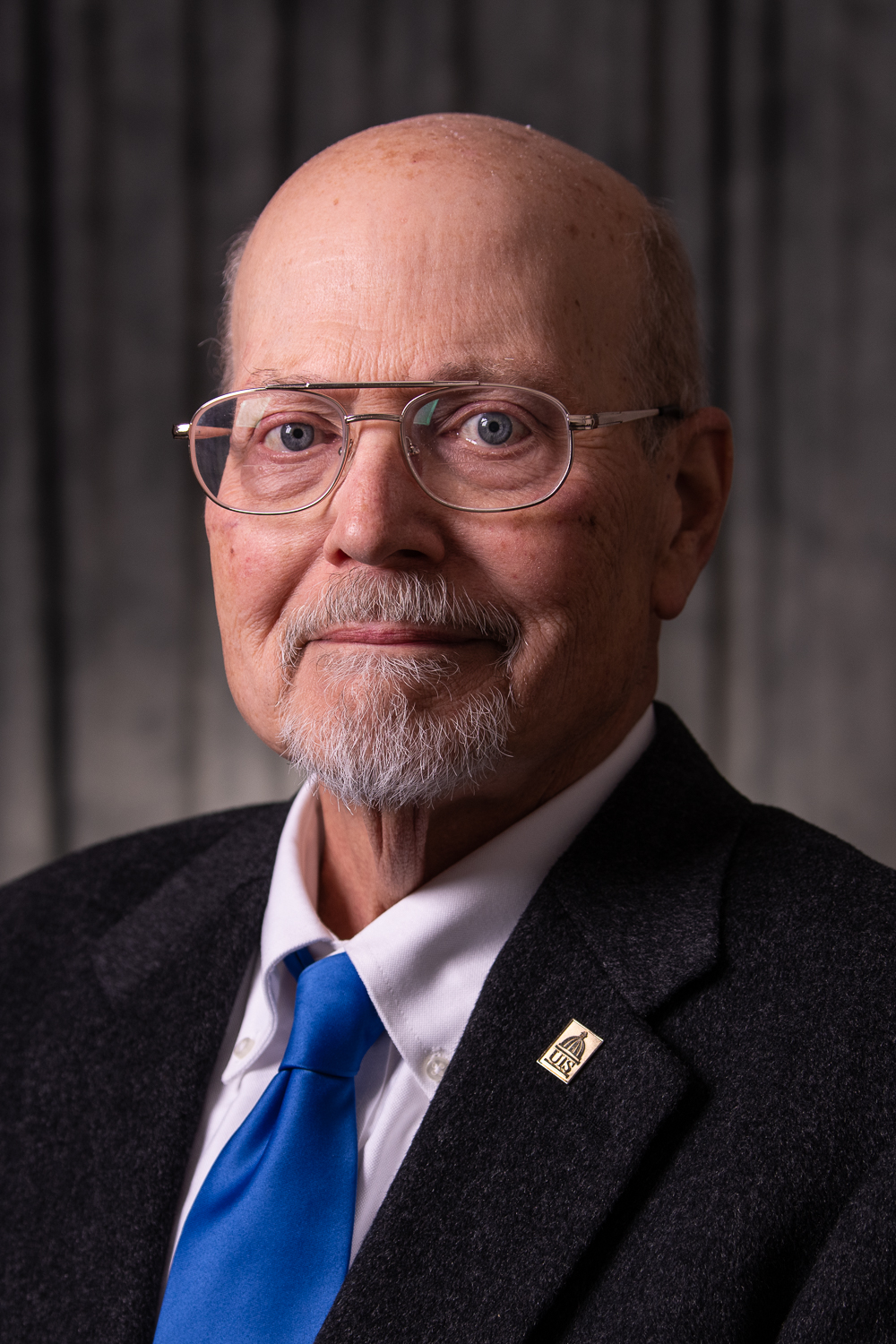

Ray Schroeder is Professor Emeritus, Associate Vice Chancellor for Online Learning at the University of Illinois Springfield (UIS) and Senior Fellow at UPCEA. Each year, Ray publishes and presents nationally on emerging topics in online and technology-enhanced learning. Ray’s social media publications daily reach more than 12,000 professionals. He is the inaugural recipient of the A. Frank Mayadas Online Leadership Award, recipient of the University of Illinois Distinguished Service Award, the United States Distance Learning Association Hall of Fame Award, and the American Journal of Distance Education/University of Wisconsin Wedemeyer Excellence in Distance Education Award 2016.
Other UPCEA Updates + Blogs
Whether you need benchmarking studies, or market research for a new program, UPCEA Consulting is the right choice.
We know you. We know the challenges you face and we have the solutions you need. We speak your language and have been serving leaders like you for more than 100 years. UPCEA consultants are current or former continuing and online higher education professionals who are experts in the industry—put our expertise to work for you.
UPCEA is dedicated to advancing quality online learning at the institutional level. UPCEA is uniquely focused on excellence at the highest levels – leadership, administration, strategy – applying a macro lens to the online teaching and learning enterprise. Its engaged members include the stewards of online learning at most of the leading universities in the nation.
We offers a variety of custom research options through a variable pricing model.