
The Synthetic Professor
We have reached a point in the development of Generative AI (GenAI) that synthetic AI professors are poised to enter academe.
We have been following the rapid development of knowledge and abilities of GenAI over the past couple of years. OpenAI Chief Technology Officer (CTO) Mira Murati recently gave some additional clarity on its capabilities. In an interview with Dartmouth Engineering, Murati describes the jump from GPT-4 to GPT-5 as someone growing from a high-schooler up to university:
“If you look at the trajectory of improvement, systems like GPT-3 were maybe toddler-level intelligence,” Murati says. “And then systems like GPT-4 are more like smart high-schooler intelligence. And then, in the next couple of years, we’re looking at Ph.D. intelligence for specific tasks. Things are changing and improving pretty rapidly.”
I should begin by noting that I am well familiar with the professoriate. My career in academe is representative of many professors. I began as a part time Instructor in the 1971/72 academic year at the University of Illinois. In 1975, I took on a full time Instructor appointment. In 1977, I began the tenure track as Assistant Professor at the then Sangamon State University which in 1995 became the University of Illinois Springfield (UIS). My career followed the incremental tracks of tenured Associate Professor to Full Professor at UIS along with several administrative titles along the way. I officially left UIS in 2022 but continue activity as Professor Emeritus. Over the years, I taught hundreds of classes, advised thousands of students, directed theses and graduate projects, served on the campus senate and a myriad of committees, member of the faculty union, convenor of an academic department, principal investigator (PI) and administrator of grants large and small, publishing papers, book chapters and delivering peer-reviewed papers at academic conferences. In sum, for decades I was fully engaged in the roles of a traditional academic. It is from that perspective that I share these thoughts on the advent of GenAI serving the roles of a non-human of the synthetic professor.
The role of the college professor has evolved over the centuries, but several core responsibilities have remained central to the position for many years. The four-part mission of tenure track faculty at many colleges and universities continues to include teaching, advising, research and service. Emphases among these areas vary with the individual and institution.
Now GenAI has arrived on the scene with the ability to assist with most all of the work that a traditional professor does. To begin with the assignment of teaching, I have asked GenAI to develop a course syllabus with all of the associated learning outcomes, lecture notes and associated graphics, formative and summative assessments, grading rubrics, recommended readings, discussion assignments, project descriptions, and other miscellaneous items that might be used in teaching the class. Further, GenAI is capable of applying rubrics to grade papers as well as creating and grading objective exams where the topical material may call for those. One can call upon more than half a dozen chatbot models utilizing different underlying Large Learning Models (LLMs) to design and administer the course, drawing upon strengths of different versions to create the unified best version of the syllabus.
The actual delivery of a class taught by GenAI can be modeled after the asynchronous learning that we have refined in online class delivery over the past thirty years. In addition, GenAI has the capability of multi-lingual voice to provide real-time interactions with students. With the recent release of GPT-4o in May of this year, OpenAI CTO Mira Murati demonstrated the advances in voice modes of their chatbots. Included in the video she shared are student engagement examples. Such technologies as these give a voice to GenAI to communicate with students, explaining difficult concepts, discussing individual problems with students, and responding to any questions students may have in 50 different languages. Khanmigo is an example of a dedicated academic AI tutor developed by the Khan Academy.
Just as the Khanmigo tool is capable of ably providing tutoring, so too can GenAI provide a greater range of advising including course scheduling for the student taking into account the various factors of prior success in pre-requisite courses, personal commitments affecting times available in a given term, special interests in electives, etc. GenAI has detailed, updated data to assist in career advice, balancing student interest with analytical predictions of future employment trends and opportunities based on student performance and preference.
In 2023, Cornell University assigned a task force to examine the use of GenAI in academic research. An expansive report addressed the use of AI tools in the various stages of research and publication. It is clear that GenAI already can play a key role in more efficiently and more completely accomplishing selected analytical and administrative tasks of research projects. This would seem likely to expand to a role that is the equivalent to co-researcher and co-author of publications. UPenn Professor Ethan Mollick writes in Co-Intelligence: How to Live and Work with AI published in Knowledge at Wharton:
“The best way to work with it is to treat it like a person, so you’re in this interesting trap,” said Mollick, co-director of the Generative AI Lab at Wharton. “Treat it like a person and you’re 90% of the way there. At the same time, you have to remember you are dealing with a software process.”
Service by GenAI is realized in many ways. With capabilities to answer a world of questions, provide advice based on cited publications, and serve as an index of resources, both physical and online, the chatbot of today can provide important services across campus and in the broader community. As an example, I have created Ray’s eduAI Advisor, a GPT openly available to assist academics in preparing for, and implementing, the use of AI in their work. University service is better accomplished with GenAI apps dedicated to taking detailed minutes in Zoom meetings, including making recommendations for resolution of disputes that surface in those meetings.
The role of the human professor is now heavily augmented by GenAI. Already, GenAI is capable of assuming, to a great degree, the roles of the traditional professor. Soon, we may begin to consider AI as a professor in its own right. In his essay, “Gradually, then Suddenly: Upon the Threshhold Small Improvements Can Lead to Big Changes” Ethan Mollick writes
“At some point, the current wave of AI technologies will hit their limits and progress will slow, but no one knows when this will occur. Until that happens, it is worth contemplating the concluding lines to OpenAI’s new paper on using AI to debug AI code: ‘From this point on, the intelligence of LLMs… will only continue to improve. Human intelligence will not.’ We know this may not be true forever, but, in the meantime, the steady improvement in AI ability is less important than the thresholds of change. Keep an eye on the thresholds.”
I believe we are on a threshold of change in the personification of the professor in higher education. Are you prepared for the standardization and integration of GenAI into the traditional role of the professoriate?
This article was originally published in Inside Higher Ed’s Transforming Teaching & Learning blog.
Authored by
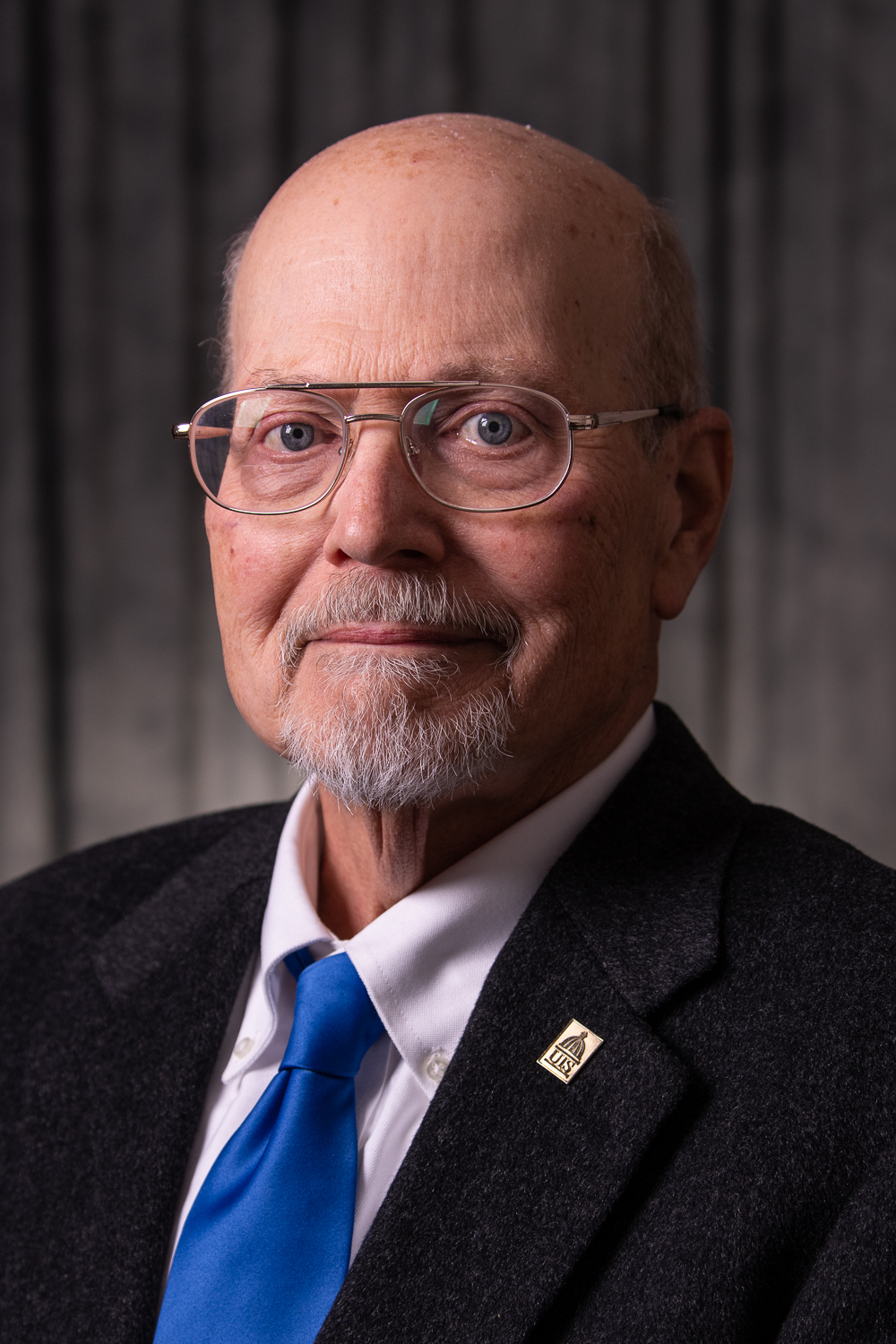

Ray Schroeder is Professor Emeritus, Associate Vice Chancellor for Online Learning at the University of Illinois Springfield (UIS) and Senior Fellow at UPCEA. Each year, Ray publishes and presents nationally on emerging topics in online and technology-enhanced learning. Ray’s social media publications daily reach more than 12,000 professionals. He is the inaugural recipient of the A. Frank Mayadas Online Leadership Award, recipient of the University of Illinois Distinguished Service Award, the United States Distance Learning Association Hall of Fame Award, and the American Journal of Distance Education/University of Wisconsin Wedemeyer Excellence in Distance Education Award 2016.
Other UPCEA Updates + Blogs
Whether you need benchmarking studies, or market research for a new program, UPCEA Consulting is the right choice.
We know you. We know the challenges you face and we have the solutions you need. We speak your language and have been serving leaders like you for more than 100 years. UPCEA consultants are current or former continuing and online higher education professionals who are experts in the industry—put our expertise to work for you.
UPCEA is dedicated to advancing quality online learning at the institutional level. UPCEA is uniquely focused on excellence at the highest levels – leadership, administration, strategy – applying a macro lens to the online teaching and learning enterprise. Its engaged members include the stewards of online learning at most of the leading universities in the nation.
We offers a variety of custom research options through a variable pricing model.