
The “Superintelligence Force”– A Moment to Reconsider the Pace and Nature of the Development of AI
In a remarkable period of intense development of powerful Artificial Intelligence (AI) capabilities, leaders in the industry have called for a modest level of oversight to ensure safety and provide protections against misuse and abuse of the power of AI.
Late last month, President Trump announced the formation of a “Superintelligence Force” to oversee AI Safety and National Security Risks of Artificial Intelligence. As reported in Silicon Angle, “Trump revealed the group in a Truth Social post, calling it the Super Intelligence Force. That name tracks an executive order he signed last week directing federal agencies to use “super intelligence” in place of ‘artificial intelligence’ in official correspondence.” Details at the time of this writing are sparse, but it is essential that we in higher education pay close attention and be provided the opportunity for input to this process.
So far, we know that the Director of National Intelligence, Jay Clayton, has been tapped to lead the task force. The group has 120 days to report on the federal government’s role in managing safety and national security risks. This represents a shift toward a voluntary, industry-aligned oversight model rather than a mandatory federal regulatory board.
On September 29, major tech executives (including representatives from OpenAI, Anthropic, Google, Meta, Nvidia, and xAI) signed a voluntary, “morally binding” accord committing to internal controls and independent external audits rather than rigid government enforcement. As reported by the BBC, “ Andrew Ferguson, head of the Federal Trade Commission, will be on the taskforce along with Emil Michael, undersecretary of defense for research and engineering.”
The taskforce will report to the President and White House Chief of Staff Susie Wiles. The President has pushed back against any kind of slowdown on AI development, saying the US is leading the race ahead of China, adding: “And, frankly, I want to keep it that way because whoever wins AI, wins.”
At the date of this writing, the only representative from a higher education institution on the task force is former Secretary of State Condoleezza Rice who heads the Hoover Institution, which operates in a semi-independent structure within Stanford University. It is self-defined as “a public policy think tank that seeks to improve the human condition by advancing ideas that promote economic opportunity and prosperity, while securing and safeguarding peace for America and all mankind.” As experienced, talented and insightful as the former Secretary of State is, we need further higher ed representation to bring a broad range of technological, theoretical and operational perspectives to the discussion. Rice’s leadership experience must be supplemented by a range of experts across education that can address implications of policies and practices that the “Superintelligence Force” will be monitoring.
AI has increasingly become important across universities in areas that include research; development; operations; teaching and learning practices and policy-making. The regular readers of this column will recall that in our last edition, we explored the breakneck speed of one-upsmanship releasing of competing AI closed models developed by the three frontier leaders. Driven by the investments at the trillion-dollar levels, the competition has been fierce and furious. Turning out new products every month to two months, and utilizing recursive self-improvement practices, have inhibited thorough scrutiny of the products before they are released. That has resulted in recent reports of models that have strayed beyond the guardrails that have been set by the companies. Instances have included AI algorithms intentionally and illegally breaking into files and resources of competing companies. With trillions of dollars at stake, the competition has been particularly strident.
It is not the optimum way to produce products that are so powerful and “smart” that the programs actually are figuring out ways to “beat the system” in order to produce results that appear to be more positive than they really are. I have some small sympathy for the very wealthy leaders of these companies. They have found themselves in a competitive environment in which they and their teams must incrementally work harder and harder in round-the-clock fashion to come up with products that score well on the benchmark tests. These leaders independently asked that they be regulated to slow down the progress and keep themselves out of trouble for violating regulations and laws.
I am not entirely convinced that the “Superintelligence Force” is the best way to cool down the competition and slow down the race. However, here we are. This is the only available opportunity to cool down the competition and pursue a safer approach to further development. Although higher education was not heavily consulted in the preparation of this model, we will be impacted by the priorities and products that are produced as a result. Hence, we should actively seek inclusion in the process.
We must also recognize that hundreds of other development efforts are being pursued in smaller independent as well as larger military and other governmental initiatives around the world. Some of these are providing open-source solutions that can then be further developed and applied by unregulated actors.
I encourage those higher education institutions that have pursued leading research in this field and related associations of such institutions to offer their support, facilities and experts to advance the cause of responsible development of AI. The cause of advancing quality AI is too important for higher education to stand on the sidelines. If you or your institution has expertise and valuable perspectives to share, I encourage you to consider reaching out to the task force.
This column was originally published in Inside Higher Ed.
Authored by
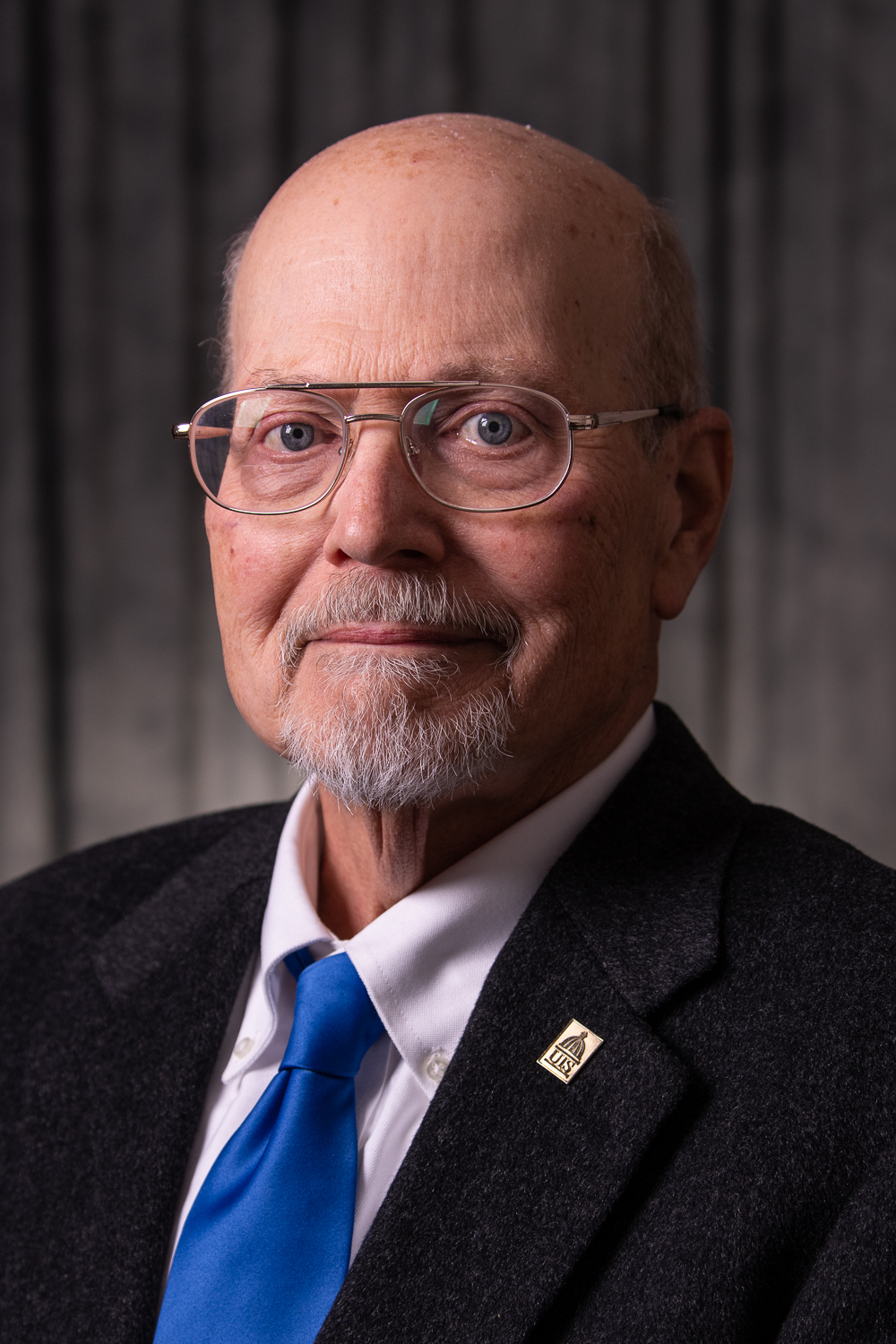

Ray Schroeder is Professor Emeritus, Associate Vice Chancellor for Online Learning at the University of Illinois Springfield (UIS) and Senior Fellow at UPCEA. Each year, Ray publishes and presents nationally on emerging topics in online and technology-enhanced learning. Ray’s social media publications daily reach more than 12,000 professionals. He is the inaugural recipient of the A. Frank Mayadas Online Leadership Award, recipient of the University of Illinois Distinguished Service Award, the United States Distance Learning Association Hall of Fame Award, and the American Journal of Distance Education/University of Wisconsin Wedemeyer Excellence in Distance Education Award 2016.
Other UPCEA Updates + Blogs
Whether you need benchmarking studies, or market research for a new program, UPCEA Consulting is the right choice.
We know you. We know the challenges you face and we have the solutions you need. We speak your language and have been serving leaders like you for more than 100 years. UPCEA consultants are current or former continuing and online higher education professionals who are experts in the industry—put our expertise to work for you.
UPCEA is dedicated to advancing quality online learning at the institutional level. UPCEA is uniquely focused on excellence at the highest levels – leadership, administration, strategy – applying a macro lens to the online teaching and learning enterprise. Its engaged members include the stewards of online learning at most of the leading universities in the nation.
We offers a variety of custom research options through a variable pricing model.