
Should All College Degrees Come with a Lifetime Professional Ed Contract?
Information and knowledge are growing at an accelerating rate. As we usher graduates out of college, much of their knowledge is useless, already out of date.
On Medium, Futurist Jim Carroll writes “In 1900, knowledge doubled approximately every 100 years. By 1945, this rate accelerated to every 25 years, and by 1982, it was every 13 months. Currently, between 2020 and 2025, some estimates suggest that knowledge is approaching a doubling rate every 12 hours.” That’s merely the time between breakfast and dinner!
Unfortunately, we graduate students with degrees and certificates that once upon a time, we believed certified current and continuing expertise in a given field. It lasted a lifetime. That was true at the turn of the twentieth century, but certainly not now in the Age of AI. As we continue to accelerate the creation of new information, how can we ensure our students in degree or certificate programs are kept up to date with what they need for the ever-changing workplace?
As a Professor of Communication at the University of Illinois Springfield 30 years ago, the accelerating rate of change in my field of Communication Technology was abundantly apparent ahead of many other fields. In teaching my graduate seminar in New and Emerging Technologies in the Electronic Media, I was challenged with getting my students to identify new knowledge and information in order to write literature critiques and research reports. I created a curated reading listserv for students enrolled in the seminar each term. Some of the most dedicated students asked me at the end of the semester if I could keep them on the listserv for the following terms so they could continue to keep up with the cutting edge. When it became available, I moved to a “new” online technology developed by Pyra Labs called web logs or “blogs.” (Later Pyra was acquired by Google as a foundation for blogger.com.) As a result, the curated readings moved to the then new World Wide Web and became available most everywhere around the globe.
The primary purpose of the blogs I developed was to offer students links to key articles as they came out on important emerging topics in electronic media. It was a curated reading list. However, as with much online material, the blogs came to serve many functions around the world; corporate leaders subscribed to keep up with the newest releases, faculty members at other institutions subscribed to have access to updated resources for their own classes and enterprising students elsewhere found this was a good source of new materials for their own analogous seminars that didn’t require digging through periodical guides.
For my own purposes, I began to share the concept at national conferences, such as the annual Distance Teaching and Learning conference in 2007. I referred to the practice as the “Semester without End” in which students could continue receiving updates on course material after they had completed the course. Since I was already doing the blogging for the current class, there was no extra work to share it with others via the blog URL. This approach provides a low or no-budget, tried and true way that a professor can share a curation of links to new and emerging discoveries, theories, practices and applications in any field. As I write this article the much-evolved blog, now named Professional, Continuing and Online Education by UPCEA is on the verge of passing three million page views.
It was also a two-way medium with the option to allow readers to comment and discuss the material that was shared. As such, I believe a version of this curated reading list with associated podcasting can become the backbone of addressing the issue of keeping graduates of degree programs and completers of certificate programs updated on subsequent new materials. The addition of periodic synchronous sessions can provide further professional learning opportunities in the discipline area by bringing in guest speakers to address important developments in practice or those that are anticipated.
Some larger universities offer continuing education aimed specifically at alumni such as the Purdue for Life program that offers more than 200 online or hybrid programs. New York University (NYU) offers $15 “Alumni College” professional certificates and classes through their School of Professional Studies. The University of Michigan offers alumni free access to more than 100 online courses as Continuing Education for Alumni. Other universities offer alumni discounts on their continuing and professional learning programs such as Brown University’s Lifelong Learning and Travel Program, and Duke University offers alumni an assortment of programs and learning opportunities.
These are admirable initial efforts to provide graduates and certificate completers with the opportunity to keep up with the rapidly changing technological environment, the AI-enhanced advancements and the societal context of the evolving complex fourth industrial revolution. We are no longer judged by what we teach in semesters leading up to degrees or certificates online or on campus, but rather by the way in which we support our learners when they enter careers in the workplace. These are careers that may radically change over time, some will become extinct, replaced by agentic AI, embodied robotics and technologies yet to be imagined.
Therefore, we need to continue to grow our efforts to ensure that our learners are not abandoned by employers for lack of preparation in response to those changes wrought by the fourth industrial revolution. Regrettably, we have graduated and certified countless learners over the past decade who are today being confronted with the lack of foresight and skills necessary to advance in their career field.
Who at your university is leading the effort to ensure that all learners are offered free or affordable continuing professional learning opportunities that enable them to successfully advance with their careers in the emerging fourth industrial revolution? Are you prepared to support your students through custom blogs as a lifeline to update their knowledge and skills? This cannot wait another semester, another year; we are certifying learners who are leaving our universities unprepared for the careers that will emerge this year and in 2027.
This column was originally published in Inside Higher Ed.
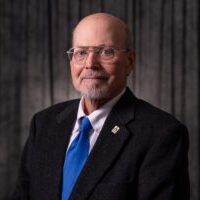
Ray Schroeder is Professor Emeritus, Associate Vice Chancellor for Online Learning at the University of Illinois Springfield (UIS) and Senior Fellow at UPCEA. Each year, Ray publishes and presents nationally on emerging topics in online and technology-enhanced learning. Ray’s social media publications daily reach more than 12,000 professionals. He is the inaugural recipient of the A. Frank Mayadas Online Leadership Award, recipient of the University of Illinois Distinguished Service Award, the United States Distance Learning Association Hall of Fame Award, and the American Journal of Distance Education/University of Wisconsin Wedemeyer Excellence in Distance Education Award 2016.
Other UPCEA Updates + Blogs
Whether you need benchmarking studies, or market research for a new program, UPCEA Consulting is the right choice.
We know you. We know the challenges you face and we have the solutions you need. We speak your language and have been serving leaders like you for more than 100 years. UPCEA consultants are current or former continuing and online higher education professionals who are experts in the industry—put our expertise to work for you.
UPCEA is dedicated to advancing quality online learning at the institutional level. UPCEA is uniquely focused on excellence at the highest levels – leadership, administration, strategy – applying a macro lens to the online teaching and learning enterprise. Its engaged members include the stewards of online learning at most of the leading universities in the nation.
We offers a variety of custom research options through a variable pricing model.