
Credential Train Is Leaving the Station—Get on Board
In 1997, Sylvia Manning, then VPAA of the University of Illinois system, later president of the Higher Learning Commission, declared, “The online learning train is leaving the station—get on board or be left behind!”
That prescient message by one of higher education’s most astute leaders of the past quarter century certainly proved to be true. We all have witnessed the growth of online learning, with increasing enrollments in that sector while overall higher education enrollments declined. This was further accelerated with the introduction of emergency remote learning that transformed over the past several years into many more refined online learning offerings supported by sound pedagogy, technology and faculty development. Online learning has had a major positive impact across the industry by bringing the learning to the student rather than requiring the student come to the campus. It has accelerated and enhanced professional career development for adult learners.
Now, decades later, Manning’s message is true for alternative credentialing programs in higher education. An equally large—or larger—positive impact is anticipated for higher education with widespread adoption of credentialing that is shorter-term, less expensive, more timely and more career-centric than traditional full-length degree programs.
A number of factors combine to make the move to offering shorter, alternative and supplemental credentials important for most colleges and universities. As Omer Riaz, vice president of strategy and innovation at Jenzabar reports, “1.7 million fewer students are enrolled today than were enrolled 10 years ago. Simultaneously, the cost of college has increased over 25 percent, the percentage of courses taught by tenured professors has steadily declined, and students are leaving degree programs with more than $30,000 in debt and often without the skills necessary for lucrative jobs.”
The most recent figures from the National Student Clearinghouse Research Center show the national six-year college completion rate is a mere 62.2 percent. While the percentage is slightly higher than in immediately prior years, it is shameful that 39 million college students invested time, money and personal expectations into higher education, only to have left in six or fewer years without any credential or substantive evidence of their investment.
What other fields are there in which nearly 40 percent of consumers invest years of effort and tens of thousands of dollars to be left with nothing? Big-time gambling and high-risk investments in cryptocurrencies come to mind as possibly equivalent risky activities. Lending Tree unpacks the data: “Americans owe nearly $1.75 trillion in student loan debt, spread out among about 46 million borrowers. That’s about $440 billion more than the total U.S. auto loan debt.” At about $38,000 of long-term debt load per student, that is a daunting beginning for college graduates, who earn an average of $55,260 coming out of college—for those who are hired.
As a result, CNBC’s Jessica Dickler reports, “More than two years into the pandemic, nearly three-quarters, or 73 percent, of high schoolers think a direct path to a career is essential in postsecondary education, according to a survey of high school students. The likelihood of attending a four-year school sank from 71 percent to 51 percent in the past two years.”
The public demand is clear. It is for shorter, less expensive, more relevant certificates and certifications that have value in the workforce marketplace. These can be self-paced or term-paced; in a workplace, online, classroom or a combination; there are thousands of examples with the potential for thousands more. The key is that they must be timely and credible to both the participants and the employers who are doing the hiring. Universities are already responding and will continue to expand these alternative and supplemental credentials. Speaking at a conference of the Non-Degree Credentials Research Network, George Washington University provost Christopher Allen Bracey predicted, “The world and industry are going to demand that we be lifelong learners … constantly retooling and evolving to meet the demands of the day.”
So, how do colleges and universities with few or no such programs get started? In most cases it begins with a connection to employers and involves designing, developing and marketing wholly new curricula that efficiently and effectively prepare learners for careers. However, another alternative has appeared on the scene from a competitor to many universities that may kick-start the process.
Coursera, like other MOOC platforms, has built its business by brokering low-cost, massive online classes developed by corporations, industries, colleges and universities, giving them a platform to deliver and market their career courses directly to students. But now the company has redirected efforts to provide, in addition, offerings to colleges and employers, who in turn can provide them to their own students, as described by Natalie Schwartz of Higher Ed Dive:
The company doubled down on that strategy Wednesday, when it announced the launch of a career training academy that enables users to earn entry-level certificates from companies like Meta and IBM in fields such as data analytics, social media marketing and user experience design. Institutions—including colleges, businesses and government organizations—can sign up to make the platform available to their students or employees. Coursera officials envision that colleges will make the platform, called Career Academy, available to college juniors and seniors so they can learn skills directly connected to jobs. While the company expects colleges to offer the platform outside of their core curriculum, some faculty members have signaled interest in baking the offerings into their classes, said Scott Shireman, global head of Coursera for Campus.
The Career Academy is one way a college or university can get aboard the alternative credential train in rapid fashion by leveraging mini programs developed by industry leaders. The opportunities are growing swiftly.
Does your institution have an effective process for developing and releasing relevant and efficient certificates that meet the changing needs of the workforce? Is this an important part of the future plans for your institution, or will your university be left behind at the train station?
This article was originally published in Inside Higher Ed’s Transforming Teaching & Learning blog.
Authored by
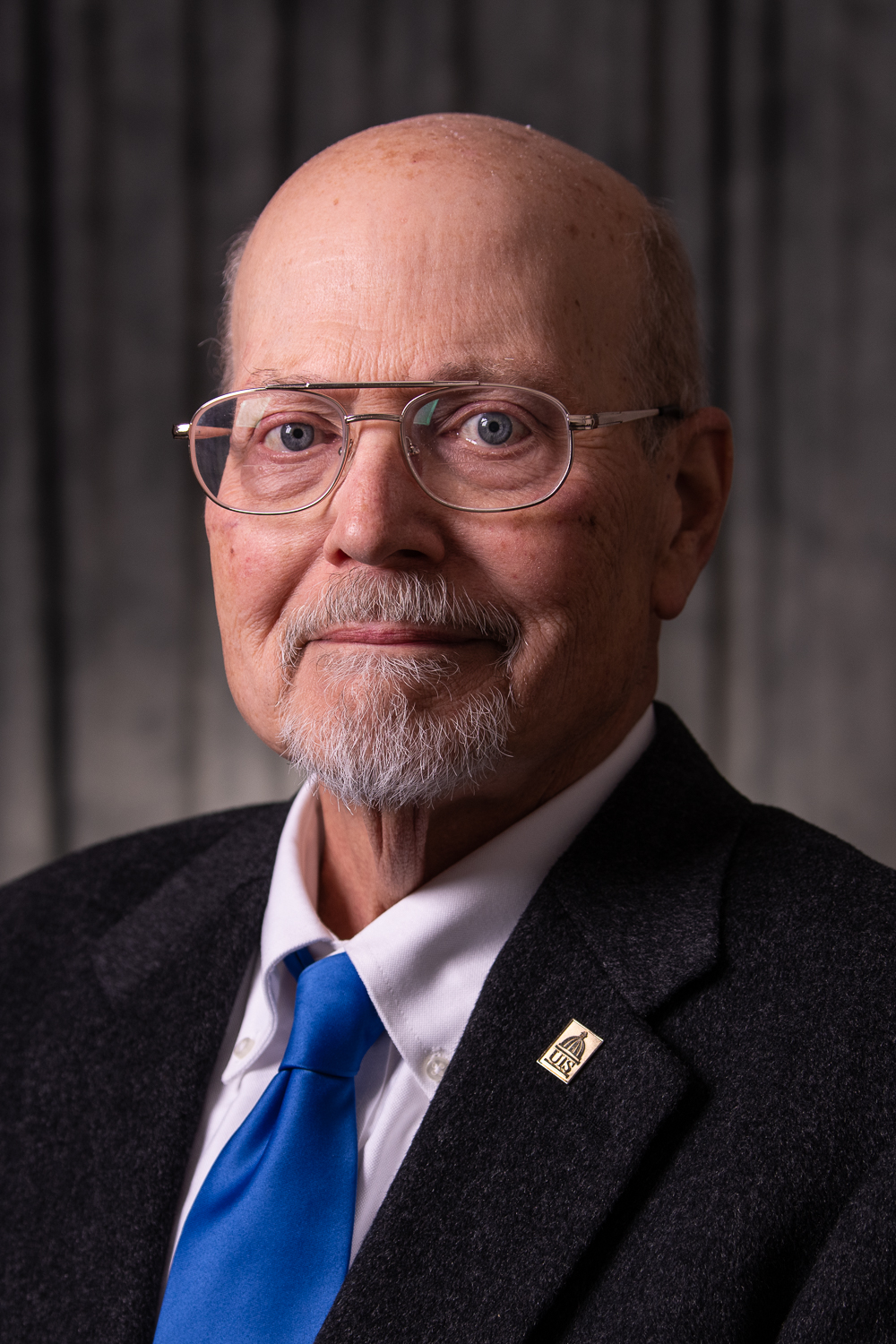

Ray Schroeder is Professor Emeritus, Associate Vice Chancellor for Online Learning at the University of Illinois Springfield (UIS) and Senior Fellow at UPCEA. Each year, Ray publishes and presents nationally on emerging topics in online and technology-enhanced learning. Ray’s social media publications daily reach more than 12,000 professionals. He is the inaugural recipient of the A. Frank Mayadas Online Leadership Award, recipient of the University of Illinois Distinguished Service Award, the United States Distance Learning Association Hall of Fame Award, and the American Journal of Distance Education/University of Wisconsin Wedemeyer Excellence in Distance Education Award 2016.
Other UPCEA Updates + Blogs
Whether you need benchmarking studies, or market research for a new program, UPCEA Consulting is the right choice.
We know you. We know the challenges you face and we have the solutions you need. We speak your language and have been serving leaders like you for more than 100 years. UPCEA consultants are current or former continuing and online higher education professionals who are experts in the industry—put our expertise to work for you.
UPCEA is dedicated to advancing quality online learning at the institutional level. UPCEA is uniquely focused on excellence at the highest levels – leadership, administration, strategy – applying a macro lens to the online teaching and learning enterprise. Its engaged members include the stewards of online learning at most of the leading universities in the nation.
We offers a variety of custom research options through a variable pricing model.