
Why PCO Leaders Need to Teach
<Imagine a radio announcer making this dedication> This post goes out to all of the professional, continuing and online education (PCO) leaders that have asked me how I manage to teach in my spare time. </ voice>
For the last several Winter terms (or Spring terms for some of you), I have taught the Intro to Adult and Continuing Education course at Eastern Michigan University, my alma mater. Sure, it makes my schedule tricky and means my nights and weekends are busier, but I wouldn’t trade it for the world. If you have the opportunity to teach I think you should, and I would like to spend some time convincing you.
Perspectives
The course I teach is an elective in a few programs at EMU, including a Master’s Program in Student Affairs. With each course offering, I have the opportunity to share a practitioner’s perspective on adult learning. I strive to share real world examples of the impact adult and continuing education has on the lives of participants. While I could spend the entire semester on adult learning theory and the impact learning in adulthood has on individuals and communities, I do not. My goal is to influence the perspectives and skills of future leaders that may find their career path taking them through a PCO unit (or two).
It is fascinating seeing students share their thoughts on adult and continuing education. So many throughout the years have indicated that they would be interested in pursuing a career in adult and continuing education after taking my class—mainly due to the varied nature of our work. They often confess that they never knew PCO was an option. You see, just as PCO professionals are the unsung heroes on college and university campuses, our work can go unnoticed or unknown to faculty members that teach in postsecondary-focused academic programs. Advocating for ourselves as professionals means advocating for our area of practice to be included in academic programs.
The culminating experience in my class challenges students to develop program plans for adult and continuing education participants. Every year I am amazed at the thoughtfulness and interesting programs planned by graduate students (if only all administrators showed such creativity and detail in program planning). You see, these students are the very same people that will lead programming efforts on our campuses in a few short years. I believe that changing the culture of postsecondary education to focus on contemporary learners (formerly known as non-traditional or adult learners) is supported by helping shape the perspectives of the leaders of tomorrow.
Here’s an example of me practicing what I preach: I require all student work posted in my online course and intended for access by others to be accessible. I provide links and information on how to caption videos, inform students that YouTube’s automatic captioning does not meet minimum accessibility requirements, and make accessibility part of my grading rubric. Honestly, could I do without the headaches and 11th hour emails? Sure. But how could I call myself an online professional if I didn’t take the opportunity to build this skill in future leaders, the same individuals that in a year or two may be responsible for creating website content for their university? If I don’t include practical skills and knowledge in creating accessible content for a postsecondary audience, who will?
Challenging Yourself
Ok, so I have shared the impact I am striving for in my class in terms of students, but what about me? How am I learning and growing? Well, let me tell you!
Moving a hybrid course that I inherited from one LMS to another and developing the rest of the course content so the offering would be completely asynchronous and online was a challenge. Sure, I had been on the administrative side of online for a decade at that point, but nothing prepares you for the hijinks in store for you when you don’t bother to view the ‘how to build a quiz’ tutorial provided by the instructional design team (guilty as charged). I admit that I went into the last days of 2014 a bit overconfident (waiting until the last weekend before a term start—a holiday weekend no less—to engage in this work). In the wee hours of 2015 I realized that no matter what you think you know about online course development, unless you are an instructional designer, “you know nothing, Jon Snow” (yes, that is a Game of Thrones reference). Since that time I have been far more considerate and solicitous to faculty, especially faculty that are first-time online instructors.
But you know what? That challenge was just that, a challenge. It was a new learning experience for me. Every day we face obstacles to our work and situations we need to negotiate. While my work varies, I find the most rewarding and exciting projects for me are those where I am beyond my depth—where I force myself into uncomfortable or really difficult situations. Now, could I have chosen not to try and convert a class to a new LMS over a holiday weekend right before the semester starts? Sure, but where’s the fun in that?
Bringing It Home
One of my mantras is “be the change you want to see in the world.” If we believe that we are professionals, we need to present our PCO work as necessary, nuanced, and requiring academic study. WE need to do this. We need to teach and we need to publish our research, although that’s another blog post for another day. I encourage you to talk to the leaders of your College of Education. Share with them the work that you do and how including that work in the curriculum (even as an elective) will provide students with a new perspective to the work they will embark on after they graduate. Let me know if you need help brainstorming or proposing a course. I would love to help you with these discussions.
Ok, well now you know why I teach. Now I want to know why you teach—anyone? Bueller?
Authored by
ABOUT THE AUTHOR
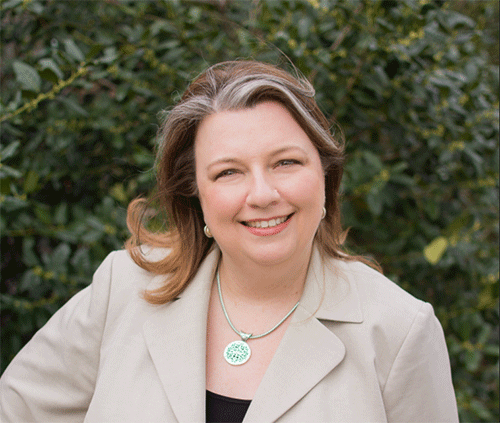
Julie Uranis serves as the Vice President for Online and Strategic Initiatives at UPCEA. In this capacity she is the Managing Director of the National Council for Online Education and leads the planning efforts for the Summit for Online Leadership and Administration + Roundtable (SOLA+R). Prior to joining UPCEA she lead the distance learning and continuing and professional development teams at Western Kentucky University as the Director of Distance Learning and Continuing & Professional Development. Julie began her career at Eastern Michigan University (EMU) where she held both teaching and administrative positions. Julie has a Ph.D. in Educational Leadership, a Master of Science in Technology Studies, and a Graduate Certificate in Community College Leadership from EMU.
ABOUT
A Different Corner is written by Julie Uranis, Senior Vice President, Online & Strategic Initaitives. This blog veers into topics du jour in PCO and as the title of the blog might imply, a George Michael lyric or ten.
Click here to learn more about UPCEA's resources for online education leaders.
UPCEA Hallmarks of Excellence in Online Leadership
Developed with a goal of identifying the range of what will constitute successful online leadership, the Hallmarks of Excellence in Online Leadership include standards, aspirations and principles essential into the foreseeable (and not so foreseeable) future of online education. The Hallmarks identify seven facets of leadership and organizational development: internal advocacy, entrepreneurial initiative, faculty support, student support, digital technology, external advocacy, and professionalism.