
The Digital Student Assistant
Online: Trending Now #133
The potential digital student assistant is on the near horizon, and it promises alter practices and pedagogies in a big way. All the parts are there; almost certainly some developers are in product testing for a digital student assistant. By assistant, I don’t mean the “Jill Watson” AI graduate assistant that Professor Ashok Goel of Georgia Tech has so successfully and famously developed. Now in his ninth semester of utilizing an AI teaching assistant, Goel continues to refine the product.
Instead, I mean the kind of personal assistant that will soon be available to students to aid in their completion of homework and, perhaps, tests. Already on the market are chatbot apps that meet many of the needs of college students. For example:
For instance, Leeds Beckett University in the UK is using chatbots to help students find unfilled seats in courses. BI Norwegian Business school is implementing chatbots that respond to questions from students on assignments. And Georgia State University uses chatbots to help fight summer melt. Though conceived as a tool of convenience, chatbots will track, analyze, and adapt realtime to massive amounts of student data. Leveraging chatbot and voice-assistant technology could revolutionize the student experience.
Students already use Alexa and Google Home to help with their homework.
For example, nearly a third of respondents ages 14 to 17 said they use them regularly. Respondents ages 18 to 34 are more interested in AI than older respondents, but just 23% of these older millennials use the technology regularly.
By comparison, just 14% of 35- to 55-year-olds use these digital assistants frequently, and even fewer respondents ages 55 and older do so. Even among people who just started using them, adoption is highest among teens and millennials.
In many of these cases, students simply voice their homework questions such as math problems, history questions, and literature critiques. Beyond these rather simple applications will come the assistant serving the academic side, with refined capabilities such as ability to research unique topics and report in high quality prose; compose documents in APA or MLA style; and connectivity to printers. Siri or Google replies with the answer. But, taking this just one more step, imagine the student request is for a 10-page paper with a dozen annotated sources in APA style on the colonial impact of the French Revolution. “Oh, and print out two copies for me within the next ten minutes!”
How will this impact the way in which we assign final papers in our classes? And, consider the advent of AlterEgo at MIT. It is described as a “personalized, wearable silent speech interface.” Simply by silently reading text, the thought process is captured by as few as four sensors that input data (such as a test question) into a computer which is then programed to voice the reply into a bone-conduction headset.
Imagine how this will impact assessment at your institution and among standardized tests. The pressure will be on to create more authentic assessments – computer aided or not – that will better reflect real-work-based activities.
Of course, I will continue to track the developments in MOOCs, emerging trends, technologies, pedagogies and practices in continuing and professional higher education and share them with you through Professional, Continuing and Online Education Update blog by UPCEA. You can have the updates sent directly to your email each morning – no advertising, no spam!
Best,
Ray Schroeder
Director
National Council for Online Education
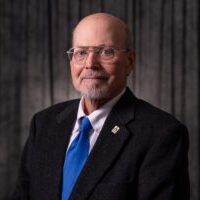
Ray Schroeder is Professor Emeritus, Associate Vice Chancellor for Online Learning at the University of Illinois Springfield (UIS) and Senior Fellow at UPCEA. Each year, Ray publishes and presents nationally on emerging topics in online and technology-enhanced learning. Ray’s social media publications daily reach more than 12,000 professionals. He is the inaugural recipient of the A. Frank Mayadas Online Leadership Award, recipient of the University of Illinois Distinguished Service Award, the United States Distance Learning Association Hall of Fame Award, and the American Journal of Distance Education/University of Wisconsin Wedemeyer Excellence in Distance Education Award 2016.
Other UPCEA Updates + Blogs
Whether you need benchmarking studies, or market research for a new program, UPCEA Consulting is the right choice.
We know you. We know the challenges you face and we have the solutions you need. We speak your language and have been serving leaders like you for more than 100 years. UPCEA consultants are current or former continuing and online higher education professionals who are experts in the industry—put our expertise to work for you.
UPCEA is dedicated to advancing quality online learning at the institutional level. UPCEA is uniquely focused on excellence at the highest levels – leadership, administration, strategy – applying a macro lens to the online teaching and learning enterprise. Its engaged members include the stewards of online learning at most of the leading universities in the nation.
We offers a variety of custom research options through a variable pricing model.