
Imagine We Are Starting a University Now
In so very many ways, we in higher education have fallen behind business, industry, governments, and society as a whole. We are offering programs and products that may have been relevant 50 or a hundred years ago but are not in touch with the society of the fourth industrial revolution. Learners currently are given few forward-thinking, innovative, engaging, and relevant opportunities.
It is rare in these days that a new university starts with the opportunity to break the mold of centuries gone by. One of the positive examples is provided by Minerva University, which is recognized as one of the most innovative universities in the world. The Minerva approach is described by the university as: “… fully active and engaging to improve student learning and retention. Developed from research in the science of learning, students gain foundational skills and transferable knowledge and are continuously provided data-informed feedback through our Forum platform.” Many other innovative practices are described at the website and on their blog.
Imagine for a moment, that we are creating a university anew in 2022. What would we change; what would we retain; how would it differ from what students, faculty and staff currently experience? Within some broad topical areas, here are starting points for the discussion.
Learners
In 2022, we must balance the needs across the life of our learners. The majority of advanced (higher) learners are no longer in their twenties; rather they span the dual credit teenagers in high school through those already in the workforce and even those in senior years.
Lifelong learning has arrived in part because of the unrelenting growth of technologies. These include AI, immersive tech, and other types of ubiquitous access that have afforded changes in the workplace. The median tenure with an employer in the U.S. is just over four years; so, employees are constantly upskilling and re-tooling for new jobs. The changes demand professional development throughout our learner lifetimes. All indications are that these changes will continue to come – not just in a linear fashion, but in the exponential increase that we are coming to expect of high tech. The workplace of the 2030s will have less in common with the workplace at the start of the century.
Higher education as a field will serve widely varying ages, locations and goals of a population base that is nearly as large as the world population itself. Delivery modes will vary widely as well. Face-to-face modes will be available at a premium because of the increased costs due to supporting the physical campus. Online synchronous and asynchronous modes will be selected by the learners themselves to meet the specific preferences and needs. Three-dimensional immersive environments such as VR, AR and XR will enable many pedagogical approaches and engagements among learners and experts.
Learning will be personalized. That is, there will be far fewer large group synchronous classes and far more individualized or small group learning sessions, customized to the individual needs of the learners, rather than designed to cover the wide disparity of previous knowledge and desired outcomes among twenty, thirty or fifty learners in today’s classrooms.
Technology
Networking technologies are rapidly changing, affording low latency, high bandwidth solutions that can support learners almost everywhere. The integrated networks that mesh wireless, cable and satellite afford us a worldwide reach that is both robust and affordable. New 3-D technologies are capable of creating virtual environments that approach reality itself.
Artificial intelligence in the form of 24-hour mentors, research assistants, and creativity stimulators will be available to all learners to aid in completing projects and enhancing the quality of learners’ work – just as they are for professionals in the workforce today. This broad access to the power of constantly improving, ever-more-sophisticated technology can be used to enable all learners to reach their full potential. Learning will be tied directly to learner-chosen desired outcomes.
Pedagogy
The methods and practices of teaching in our new university will emphasize engagement, immersion and active learning. Authentic assessment will be the most prevalent approach to guiding success. There will be no memorization for the sake of merely regurgitating facts. The emphasis will be on cultivating creative and critical thinking. Too often today we assess learning by how pleasant the experience is, rather than assessing retention as well as how authentically relevant and meaningfully those experiences and outcomes will apply to real-life situations.
Much of the learning will be asynchronous and self-paced with periodic group projects and engagements. These will be designed to best accommodate learner schedules while leveraging the value of group experiences where appropriate to enhance the personalized sessions.
Disciplines
The traditional disciplines will diffuse into cross-discipline studies enhanced with relevant skills such as communication, persuasion, and leadership that will cultivate diversity, inclusion and sharing of values. In many cases, disciplines will be explored in stackable credentials where various stages of mastery can best be recognized. Linkages of the knowledge and skills in fields of study will be reinforced by internships, apprenticeships, and other modes of application of knowledge and skills in the workplace. This engagement will ensure that learning remains closely tied to the evolving state of the field of the discipline.
Stakeholders
Today, we have rather rigidly demarcated roles for faculty, students, and employers. Faculty are expected to have all the knowledge; students are expected to be open vessels for learning; and employers are expected to be the consumer of services from the filled vessels of the learners. These roles need to merge. Faculty need to share the mantle of expert with students who bring experiences and knowledge to the classroom. Students need to share the teaching of both faculty and peer learners. Employers need to become engaged in teaching both faculty and students about the changes that are sweeping their field, as well as the vision for the future. To best succeed in this rapidly changing environment we need deep and open collaboration without rank or deference.
Research
University sponsored research will be chosen to supplement and enhance curricula and areas of institutional emphasis. In many cases this will mesh well with individual faculty member interests and expertise, but where it does not, the institutional priority will prevail so that students are given the best opportunities to engage in the research process. As with the prior areas, the emphasis will be on student-centeredness.
Time to Begin
Do these characteristics describe your university today? Are there pockets of the institution that are forward-thinking in their intentions and practices? How can we leverage their leadership to bring other parts of the university forward into greater collaboration and innovation in meeting the needs of learners and the wider society?
This article was originally published in Inside Higher Ed’s Transforming Teaching & Learning blog.
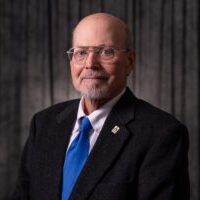
Ray Schroeder is Professor Emeritus, Associate Vice Chancellor for Online Learning at the University of Illinois Springfield (UIS) and Senior Fellow at UPCEA. Each year, Ray publishes and presents nationally on emerging topics in online and technology-enhanced learning. Ray’s social media publications daily reach more than 12,000 professionals. He is the inaugural recipient of the A. Frank Mayadas Online Leadership Award, recipient of the University of Illinois Distinguished Service Award, the United States Distance Learning Association Hall of Fame Award, and the American Journal of Distance Education/University of Wisconsin Wedemeyer Excellence in Distance Education Award 2016.
Other UPCEA Updates + Blogs
Whether you need benchmarking studies, or market research for a new program, UPCEA Consulting is the right choice.
We know you. We know the challenges you face and we have the solutions you need. We speak your language and have been serving leaders like you for more than 100 years. UPCEA consultants are current or former continuing and online higher education professionals who are experts in the industry—put our expertise to work for you.
UPCEA is dedicated to advancing quality online learning at the institutional level. UPCEA is uniquely focused on excellence at the highest levels – leadership, administration, strategy – applying a macro lens to the online teaching and learning enterprise. Its engaged members include the stewards of online learning at most of the leading universities in the nation.
We offers a variety of custom research options through a variable pricing model.