
Communicating the Realities of Higher Ed in 2022
This is a challenging time to lead, as a provost, dean, director or department chair at a college or university. That is not to say that there are not successes and rewards to be achieved, but they come harder than in decades past.
One can say that every era in our field has brought challenges. Yet this time we are facing sea changes that span the entire field and beyond. Let’s look at a few of these changes and how today they impact the way in we which lead for tomorrow.
It is clear to those who objectively look at our field that we are approaching a fundamental change in the way in which we fund and deliver our noble mission of education. Ever since the first universities were established more than 1,000 years ago in Fez, Morocco; Cairo, Egypt; and Bologna, Italy, we have been an exclusive field serving a minority of residents in our countries. Over the centuries, we were financed in a variety of ways—from taxes to tuition. We have finally reached the point that in the U.S. alone, our students have accrued $1.75 trillion in debt. Consumers simply cannot afford to pay the debt generated by the cost of a degree. At last, we have reached the point where higher education is becoming unsustainable through the residential campus-based tuition model as it exists today.
Increasingly, employers are recognizing the situation and dropping college degree requirements for jobs. To take the place of degrees, a tidal wave of less expensive, mostly online nondegree credentials and certifications, internships, and apprenticeships have arisen to provide more direct, affordable paths to acquiring the knowledge, skills and abilities needed for successful careers. A whole host of providers such as Coursera, edX (now a part of 2U), Udacity, Udemy, Future Learn, LinkedIn Learning, Khan Academy and many more are providing at-scale learning at low or no cost to learners around the world. More than 220 million learners enrolled in at-scale classes and degree programs in 2021. That’s more than 10 times the number of students enrolled in traditional programs at U.S. colleges and universities. Meanwhile, college enrollments continue to their decade-long decline.
Yet a high percentage of faculty, staff and less informed administrators in higher education do not fully realize that the business model is broken. They do not understand that it is not—and never will be again—business as usual such as it was 20 years ago. In another information-centric field, that was the case for newspapers—some 1,800 papers have closed since 2004, as consumers have migrated to cable and online news sources. In another industry in 1999, music CDs brought in a robust $13 billion in sales; in 2018, that had dropped to $614 million. We are, I believe, on the same path. Just as cable and internet news services supplanted newspapers, and subscription strategies enabled music services to supplant records and CDs, we are seeing internet-enabled, affordable MOOCs, continuing education and related at-scale learning meeting education needs.
The huge infrastructure costs of campuses supporting outdated models of teaching are no longer viable. As an industry, to cut costs, we shifted the front-line teaching expenses to adjunct faculty who now comprise 40 percent of the teaching force and are paid less than 25 percent of tenure-track faculty. These adjuncts typically cobble together multiple part-time teaching jobs and earn less than $25,000 annually, compared to the $80,000-plus average salary for full-time professors. This puts adjuncts below the federal poverty guideline for a family of four. This, too, is not sustainable.
Provosts, deans, directors and department chairs are caught in the vise between fiscal realities causing dropping enrollments and the regulator, legislator, faculty and staff beliefs that circumstances are the same as they were 20, 30 and 40 years ago. It is no longer tenable to lead a higher education workforce that is unaware of the magnitude of the societal changes that have changed the education marketplace. It is imperative that we give the facts of the situation to higher ed workers. To the extent that the university workforce is unprepared, unable or unwilling to make the needed changes to adapt to more efficient, effective and affordable delivery of education, there will be widespread dissatisfaction, friction and dwindling success.
Meanwhile, the broader societal workforce and industry needs are changing rapidly, fueled by artificial intelligence–powered technologies. A few years ago, it was the blue-collar worker who was most affected by intelligent robotics on the factory floor. Now, AI is replacing accountants, medical assistants and a host of other jobs that previously required college-degreed professionals. This has led to the rise of “new-collar workers” in jobs that require skills and training but not college degrees. As a result, businesses, especially those in tech, are supporting nondegree upskilling and reskilling, to cultivate the talent they need.
As a professor emeritus who rose through the ranks of the tenure track to full professor, I am dismayed that the tenure system designed to protect academic freedom has, at some institutions, become a refuge for some of the professoriate who fail to respond to the need to actively adapt to more efficient, effective and affordable models of higher education. Inevitably, more and more colleges are merging and closing. I fear this trend will accelerate in what may become a worldwide recession in the coming months.
Our first step in meeting the challenge is communication. We must relentlessly communicate to our legislators, regulators, faculty, staff and peers the nature of the challenge, the magnitude of the new competition and ultimate ramifications that confront us. Only if we collectively understand that all of our careers are threatened if we fail to make substantial changes will we have a chance to solve the crisis. This will not be solved by simply throwing more dollars at recruiting more students. It will not be solved by raising tuition once again. It will not be solved by trimming costs at the margin. It will not be solved by hiring more adjuncts. It cannot be solved alone by provosts, deans, directors and department chairs without the active engagement of faculty, staff and related others in reinventing our universities into more efficient, effective and affordable institutions.
Are you carrying this message to your university? Who will join you in ringing the alarm that we all must contribute to change that will enable the institution to survive?
This article was originally published in Inside Higher Ed’s Transforming Teaching & Learning blog.
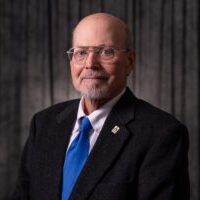
Ray Schroeder is Professor Emeritus, Associate Vice Chancellor for Online Learning at the University of Illinois Springfield (UIS) and Senior Fellow at UPCEA. Each year, Ray publishes and presents nationally on emerging topics in online and technology-enhanced learning. Ray’s social media publications daily reach more than 12,000 professionals. He is the inaugural recipient of the A. Frank Mayadas Online Leadership Award, recipient of the University of Illinois Distinguished Service Award, the United States Distance Learning Association Hall of Fame Award, and the American Journal of Distance Education/University of Wisconsin Wedemeyer Excellence in Distance Education Award 2016.
Other UPCEA Updates + Blogs
Whether you need benchmarking studies, or market research for a new program, UPCEA Consulting is the right choice.
We know you. We know the challenges you face and we have the solutions you need. We speak your language and have been serving leaders like you for more than 100 years. UPCEA consultants are current or former continuing and online higher education professionals who are experts in the industry—put our expertise to work for you.
UPCEA is dedicated to advancing quality online learning at the institutional level. UPCEA is uniquely focused on excellence at the highest levels – leadership, administration, strategy – applying a macro lens to the online teaching and learning enterprise. Its engaged members include the stewards of online learning at most of the leading universities in the nation.
We offers a variety of custom research options through a variable pricing model.