
Universal Broadband: The Time Has Come
In the weeks of COVID-19 isolation, the disparity of access to the internet has become more obvious as school-age children and adult learners have been deprived access to education and livelihoods.
It has been suggested that internet access in the 21st century is akin to access to the public utilities of water and electricity. It is a public necessity. Four years ago, the United Nations formally amended Article 19 of the Universal Declaration of Human Rights, adding, “The promotion, protection and enjoyment of human rights on the Internet” and another 15 recommendations that cover the rights of those who work in and rely on internet access. It also applies to “women, girls and those heavily impacted by the digital divide.”
This has come into focus in the lockdowns and self-isolation of the coronavirus pandemic. As billions of people around the world, and hundreds of millions in the U.S., have been restricted from public places, businesses, schools and other locations outside the home, a very clear and crippling divide has become evident. Significant geographic areas as well as lower-income demographics have been excluded from opportunities for guided learning, work, rich communication, advanced telehealth services and gainful employment. The people in these domains are virtually stranded. Without broadband access to the lifeline of the internet, these people cannot effectively work or learn from home; they cannot fully engage in society. Having been disconnected for months, they are at a huge disadvantage as we prepare for reopening businesses, schools and government.
Broadband access to the internet is widespread across the U.S. and most developed countries. Yet there remain tens of millions of Americans who do not have access. Those who live in less populated rural areas and low-income groups who may have broadband available, but cannot afford the costs, are left behind. This divide between the broadband haves and have-nots has been examined again and again over the years by the Federal Communications Commission:
Released in April, the Federal Communications Commission’s (FCC) 2020 Broadband Development Report identified approximately 18 million Americans — principally in rural areas — without access to any broadband network. The report was criticized for continuing to rely on inaccurate mapping data that skews the numbers to be more favorable than reality. An independent review of the FCC’s 2019 report found that the agency seriously undercounted unserved Americans, with the actual unserved population twice as large as the FCC claimed.
There have been some actions that attempt to address the rural divide, notably subsidies and grant programs, though these have not been fully implemented. Tom Wheeler of the Brookings Institution recommends more direct action through “an ensemble of ways” tapping a wide range of technologies and funding possibilities to eliminate the rural divide.
After we emerge from the pandemic, the internet will be even more prominent than before in education, business, government and social engagement. In isolation, we have built a deeper reliance upon the net and we will soon see an expansion of “work from home,” requiring a wider variety of network access for an increasing number of occupations. The corporate economies of a dispersed online workforce utilizing their own homes, instead of expensive business office space, will accelerate the already notable shift to working at home. Katherine Guyot and Isabel Sawhill of the Brookings Institution predict, “In the post-pandemic world, it may stay with us as a popular practice that, if done well, can improve job satisfaction, raise productivity, reduce emissions, and spread work to more remote regions.”
In order to avoid further disenfranchising the rural and lower-income workers, it is critically important that we find a way to provide universal access to the massive education and work venue that the internet has become.
How do we solve this access problem? On the one hand, affordability could be solved by subsidizing access for those who otherwise cannot afford it. The precedent for this kind of program dates back to the Reagan administration’s Lifeline program of 1985 that originally provided a voice access discount of $9.25 per month, ostensibly to assure access to 9-1-1 emergency services. That program was updated by the FCC to include measures for a 1,000 monthly minutes of 3-G service at a subsidy of $9.25 to go into effect in December of this year. While these are a great start for providing access to those who cannot afford the full cost of broadband, they are already outdated. Given the advent of 5-G service as the emerging standard for broadband and the expanding monthly subscription costs, the rules need review and revision.
What can we do as educators and institutions to further advance efforts to provide access to the many millions of Americans who are not yet served by broadband in the U.S.? This is a huge issue limiting our ability to reach learners at all education levels. Who is taking responsibility for this at your university? What can you do to help?
This article was originally published in Inside Higher Ed’s Transforming Teaching & Learning blog.
Authored by
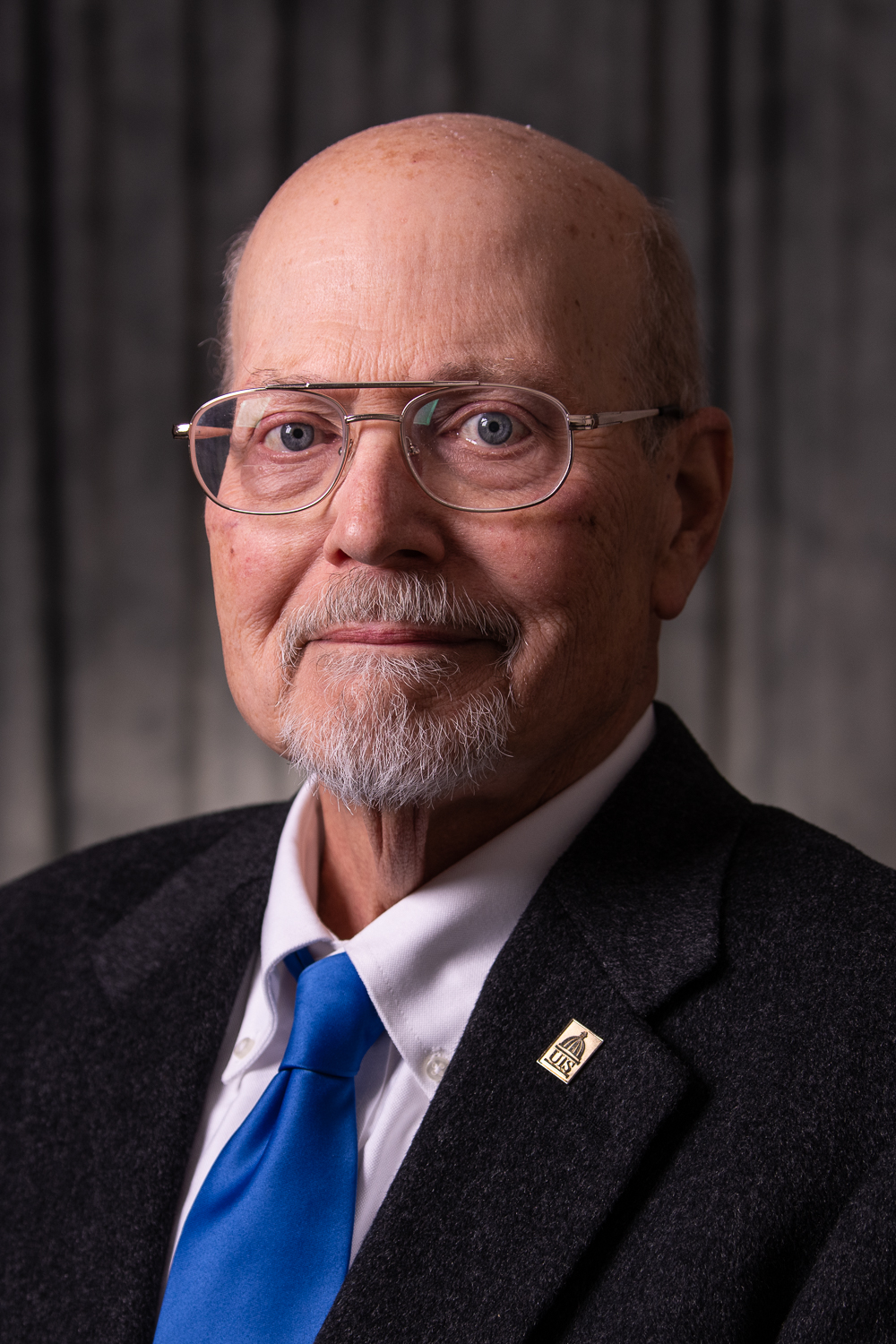
Ray Schroeder is Professor Emeritus, Associate Vice Chancellor for Online Learning at the University of Illinois Springfield (UIS) and Senior Fellow at UPCEA. Each year, Ray publishes and presents nationally on emerging topics in online and technology-enhanced learning. Ray’s social media publications daily reach more than 12,000 professionals. He is the inaugural recipient of the A. Frank Mayadas Online Leadership Award, recipient of the University of Illinois Distinguished Service Award, the United States Distance Learning Association Hall of Fame Award, and the American Journal of Distance Education/University of Wisconsin Wedemeyer Excellence in Distance Education Award 2016.
Other UPCEA Updates + Blogs
Whether you need benchmarking studies, or market research for a new program, UPCEA Consulting is the right choice.
We know you. We know the challenges you face and we have the solutions you need. We speak your language and have been serving leaders like you for more than 100 years. UPCEA consultants are current or former continuing and online higher education professionals who are experts in the industry—put our expertise to work for you.
UPCEA is dedicated to advancing quality online learning at the institutional level. UPCEA is uniquely focused on excellence at the highest levels – leadership, administration, strategy – applying a macro lens to the online teaching and learning enterprise. Its engaged members include the stewards of online learning at most of the leading universities in the nation.
We offers a variety of custom research options through a variable pricing model.